
WELCOME TO SOIL HEALTH ACTION INITIATIVE
Healthy Soil, Healthy Life
WHO WE ARE
About Soil Health Action Initiative (SOHAI)
Soil Health Action Initiative (SOHAI) is a registered Community Based Organisation working in close collaboration with smallholder farmers, local leaders, researchers, development practicioners, civil society groups and farmer organisations to innovatively tackle the issue of soil degradation, a major problem our agri-food systems is faced with. We specifically employ integrated and systems-wide approaches that addresses the inter-connected systems challenges compounding soil degradation. Currently, our field operations are based in Northern Uganda (East Africa), a region that is predominantly reliant on a rain-fed agriculture, and disproportionately being affected by the effects of climate change and soil degradation.
Blogs and Recent News


THE CONTEXT
Soil degradation, an urgent problem requiring immediate and renewed global attention
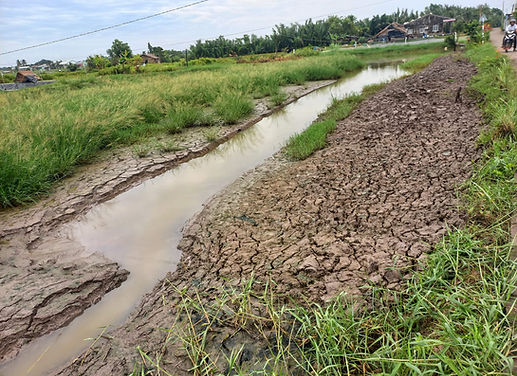
Each day, varieties of delicious meals ends on our plate: But did you know that upto 95% of those delicacies are derived from soils?. Unfortunately, the potential of our soils to continue delivering this vital service in addition to other essential public good services is increasingly under enormous threat!. WHY?. our soils are degrading at an alarming rate. Yes, about 25% of global soils are either degraded or experiencing continued degradation. Degraded soils are less of essential nutrients and soil biology that supports plant growth, water recycling and other essential complementary biochemical processes.
WHY WE MUST ACT NOW TO SAVE SOILs - THE MOTHER EARTH
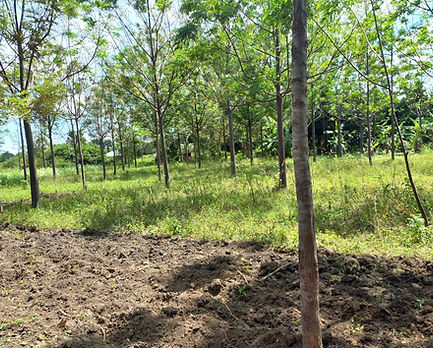
Healthy soils supports biodiverse food systems, ensuring just, sustainable, and equitable food systems
Healthy soils buffers multi-functional ecosystems and landscapes
Soils rich in essential nutrients revigorate rural and countryside economy
Healthy soil enhances carbon sequestration directly contributing to climate change adaptation and mitigation efforts
OUR Journey: From IDEATION to Grassroot ACTIONS
Inspired by my passion for environmental stewardship, soil health, rural resilience, and universal access to essential life needs including food, I established the Soil Health Action Initaive (SOHAI) in 2024. Having spent a considerable amount of my time working with farmers in northern Uganda as an agricultural knowledge facilitator, I vividly witnessed the true struggles farmers go through to derive livelihoods through agriculture on nurient deprived soils. The struggle is real, yet becoming more intense as the problem of soil degradation is even getting worst amidist climate change and evolving socio-economic conditions. As such, there is an urgent need for a revigorated focus and attention on soils. Unfortunately, soil has recieved little attention in policy making, development interventions and mainstream agricultural extension systems. Industrial agricultural paradigm has further excerbated the dearth of strategic focus on soil. To respond to this issue, in consultation with farmers and industry experts, I established the SOHAI to contribute to the growing global commitment to tackling soil degradition and biodiversity losses. Our work is anchored in our thematic areas, and directly contribute to global initiatives including the United Nations Sustainable Development Goals (SDGs). And in case you would like to partner with us, please to contact us

"I strongly believe that soil is a core foundation of human and planetary health", said Fredrick Omara, our Founder

We are building capacity, cultivating resilience and restoring hope in the face of crisis

View projects
The Making of The Soil Health Action Initiative
Community centered
Founding Inspiration
Message from Our Founder:
Our Approach: Empowering smallholder farmers for socio-ecological resilience


At the core of our innovative rural development approach is the empowerment of smallholder farmers, particularly those most vulnerable to climate change and other food system-related challenges. Our transformative actions are guided by the belief that achieving lasting sustainability requires more than isolated or siloed innovations. Instead, it demands a set of integrated initiatives that addresses complex agricultural and social systems.
At the Soil Health Action Initiative, we recognize that creating sustainable and long-term impact requires the application of systems thinking and recognising diverse perspectives and worldviews. We understand that reversing soil degradation and biodiversity loss depends on a holistic set of interventions rather than standardized, technical, and linear approaches alone. This marks a deliberate departure from traditional development models, which often address challenges in isolation, ignoring bottom-up approaches. Our approach integrates state-of-the-art interventions that address not only the technical dimensions of soil health but also interconnected social and economic factors that influence sustainable land management and behavioural change. This integrated and systems-based approach is reflected in our thematic areas, ensuring that each intervention contributes to our Vision.
Concepts and Framework Shaping Our Work

Territoriality
Knowledge Brokering and Exchange
Responsible Research
Multi-level Perspectives on Soco-technical Transition
Innovation Niches
Co-creation of Knowledge
Technical Innovations
Social Innovations

BUILDING RESILIENCE, RESTORING HOPE
MISSION
SOHAI strives to catalyse actions towards maintaining soil health, reversing soil degradation and restoration of degraded soil and its biodiversity at scale through holistic interventions and collaborative approaches for sustainable rural livelihoods
VISION
SOHAI envisions a world where humans, plants, animals, and ecosystems coexist sustainably, thrive together, and fully benefit from nature’s services, fostering social, economic, and ecological resilience for present and future generations.
Expected Multi-dimensional Outcomes of Our Interventions
Reduced soil degradation rate and increased hectarage of land under restoration
Increased resilience to climate change, seasonality, and other food systems related shocks
Better livelihoods and economic opportunities for smallholder farmers including women, youth and economically disadvantaged people
Increased food and nutrition security for a healthly and active economic and social life
Our Work and The UN Sustainable Development Goals (SDGs)


Our Work Contributes to Global Commitments to Addressing Soil Degradation and Biodiversity losses


Contribution to Uganda's National Development Agenda, Climate Change Adaptation Plans, and Resilence Building Programs