
Active Projects
Active projects
ReSTore: Re-strategizing Soil Health and Biodiversity Management Through Community Driven Restoration Initiatives in Uganda
Project location: Kwania
Scope: The primary target beneficiaries for this project is 400 smallholder farmers (including women and youth) in the fishing communities of Kwania.
Project goal: Enhanced capacity of Smallholder farmers to implement climate smart agricultral practices for soil health, food security, climate resilience and sustainable livelihoods
Duration: 2025-2027
Funding: Voluntary
APPEAL: Support this project:
Should this project be of something that interests you and you would want to support, our doors are wide open and we are excited to accept any form of assistance, be it financial or technical related. Your support will go a long way in scaling this project, acquiring project inputs, reaching more potential beneficiaries and accelerationg adoption of sustainable soil use practices among smallholder farmers in Kwania district. Our voluntary engagement with community has demonstrated early success. We have observed increased interest in the adoption of sustainable agricultural practices among beneficiaries and surrounding communities. Indeed, there is enormous potential in fostering behavioural change among farmers for the desired transition to sustanable production systems.
THE ISSUE
Soil degradation is increasingly threatening livelihoods in predominantly agricultural districts such as Kwania. For many years, artisanal fishing on Lake Kwania provided an important alternative source of income and food security for thousands of households. However, recent government measures aimed at strengthening fisheries management and regulating access to the lake have disrupted the livelihoods of communities that were heavily dependent on fishing.
While these measures are essential for promoting sustainable fisheries management, immediate compliance with the new access requirements has presented significant challenges, particularly for resource-constrained fishing households with limited alternative livelihood options.
As affected communities increasingly turn back to agriculture as their primary livelihood pathway, they may face difficulties achieving sufficient productivity and income from farming. This challenge is compounded by the widespread degradation of agricultural land, particularly in areas surrounding the shores of Lake Kwania, where soil fertility has declined due to unsustainable land-use practices and other environmental pressures.
There is therefore an urgent need to strengthen the capacity of these communities to adopt sustainable agricultural practices that restore soil health, improve land productivity, and enhance livelihood resilience. Supporting farmers with knowledge, skills, and practical approaches to soil restoration can provide a pathway toward more sustainable livelihoods while contributing to broader environmental conservation efforts.
We are already on the ground addressing these challenges through our innovative and integrated approach. However, to fully realize the potential and expand the impact of this project, additional support is needed. If you are interested in supporting this initiative, we warmly welcome your partnership. You can get in touch with us to explore collaboration opportunities or make a contribution towards advancing this important cause.
Accountability is one of our core values. We are committed to responsibly managing all forms of support entrusted to us and ensuring that our partners are kept informed about project progress, achievements, and impact through regular updates on this platform and our active social media channels, including LinkedIn.
Together, we can strengthen community resilience, restore degraded soils, and support sustainable livelihoods for vulnerable communities.


School Learners as Active Agents of Grassroot Soil Health Restoration and Conservation Initiatives
Project location: Kwania
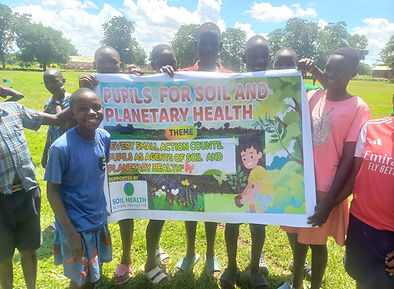
Scope: The target primary beneficiaries for this project are young learners in Primary Schools in Kwania district. Secondary beneficiaries are the school heads, Parent Teachers Association (PTA), teachers and local leaders. Currently, we are working with Abany Primary school hoping to expand to other schools.
Project goal: Enhanced learners awareness of the crucial role of soils in their environment, and how they can stimulate actions to protect soils in their schools and communities.
Duration: 2025-2027
Funding: Voluntary
APPEAL: Support this project:
Should this project resonate with you and you would like to support our efforts, we warmly welcome any assistance you offer us, and we will greatfully appreciate any form of assistance whether financial, technical or other valuable contributions. Your support will play an important role in scaling this project, enabling u s to acquire essential project resources, reach more schools and accelerate environmental stewardships in schools and the cascading effects to rural communities.
Early Results
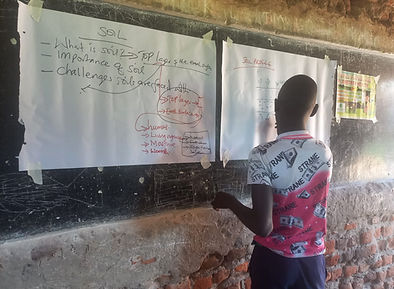
Our approach of engaging young learners through innovative school-based initiatives, including debates, environmental clubs, and hands-on learning activities such as school gardens, has demonstrated promising results in promoting behavioural change among students and school leadership teams. A key strength of our approach is the integration of project activities with existing school curricula, particularly subjects such as science and agriculture. By aligning our interventions with classroom topics and connecting them to the everyday realities of learners in farming communities, we enable students to easily relate theoretical knowledge to practical experiences. This approach strengthens learning, encourages environmental responsibility, and empowers students to apply the knowledge gained at school within their homes and communities. As many learners come from agricultural households, the lessons they acquire can be transferred to their families, creating wider community-level impacts and supporting more sustainable farming practices.
THE CHALLENGE AND SUPPORT NEED
Although the project has demonstrated significant potential to promote the adoption of sustainable agriculture and strengthen environmental stewardship among schools and rural communities, our operations are currently constrained by limited financial and human resources.
One of our key priorities has been to provide schools with basic agricultural tools and resources to support practical learning through school gardens. These tools would enable learners to gain hands-on experience and apply the knowledge acquired in classrooms. We also planned to organize learning excursions where students could visit successful schools with established school gardens and environmental clubs, allowing them to exchange experiences and learn from best practices. However, due to current resource limitations, we have not yet been able to implement these activities, alongside other important components of the project.
With your support, we can scale this transformative initiative to reach more schools, provide essential resources for effective implementation, and create greater opportunities for young learners to become champions of sustainable agriculture and environmental conservation.
For further enquiries, partnership opportunities, or to support this initiative, please do not hesitate to get in touch with us.